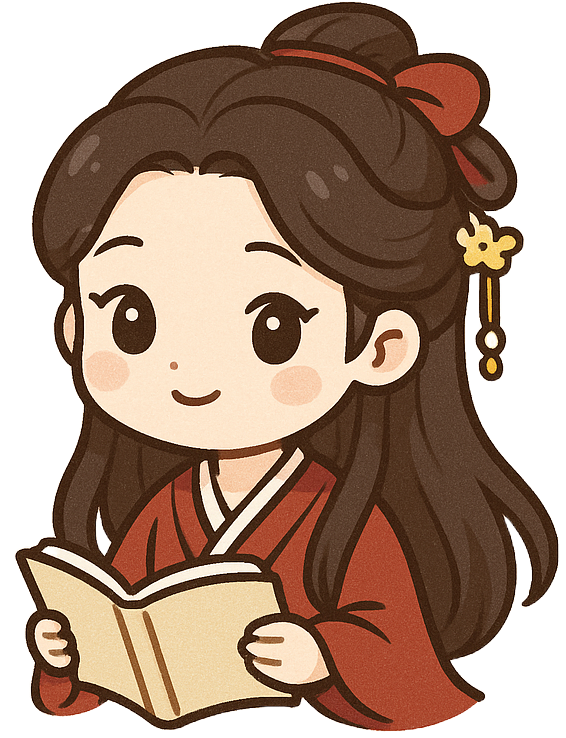
Zhenzhen spent some money to renovate and decorate the courtyard and buildings that Grandma Song had provided for her use. She also tidied and cleaned the furniture and utensils in the attic. Once everything was largely prepared and suitable for opening a shop, Grandma Song repeatedly urged her to go to the city to obtain the necessary permits for opening the shop. She said, "The town manages shops primarily for tax collection. Before opening, you must visit the city's commercial tax office, the town office, and any relevant wine, tea, or property management offices to obtain permits. If anything is overlooked, the consequences will be endless."
Zhenzhen naturally understood the reasoning, but to apply for the permits, the relevant officials would check her household registration documents. Apart from an imperial city department identification card that couldn't be used here, she had no other proof of identity. Now, being almost like a fugitive, she couldn't easily explain her difficulties to Grandma Song. Instead, she tentatively asked Zheng Er Shu, saying she had left home in a hurry and hadn't intended to open a shop in another prefecture, so she hadn't brought her household registration documents. Her hometown was far away, and making a trip back would be very difficult. She wondered if there was any flexible solution. Zheng Er Shu thought for a moment and said, "Actually, the officials at the commercial tax office and town office welcome people opening shops because it makes tax collection easier. I've heard they aren't very strict about reviewing documents. If you're really in a bind, you can ask Sun Ba Lang, who prints small newspapers in the city, for help. Tell him the details of your household registration, and he can make a copy for you. Then, give a little something to him and the officials reviewing the documents, and it should work out."
Zhenzhen followed his advice, found Sun Ba Lang, and had a document made for the review. One day, she took it to the commercial tax office of Ningguo Prefecture to apply for the permits. But as soon as she reached the front gate, she saw two guards escorting a dejected man out, heading toward the prefectural office. Onlookers quickly asked each other what had happened. An official who had just come out announced to the crowd, "This man forged his household registration to apply for shop permits. The commercial tax office, following the new prefect's orders, is punishing him severely and sending him to the prefectural office for trial. Those applying for permits should carefully check their documents. If there's even the slightest falsehood, this man is a warning."
The listeners whispered among themselves, saying that the new prefect was indeed making a strong start, acting decisively and eager to rectify social customs. Someone asked the new prefect's name. The official replied, "Haven't you heard? This one is extraordinary—he's the current Emperor's own son, the second in line, now titled Prince of Wei and appointed as the prefect of Ningguo."
This news shocked Zhenzhen greatly. Instantly, she remembered Yin Ti's words and felt a pang of sorrow for Zhao Ai, who had been sent out of the capital. She believed he had been implicated because of her and felt deeply guilty. After that, she couldn't pay attention to the others' discussions and stood silently in place until the people behind her in line urged her to go inside, snapping her out of her daze.
Numbly pushed through the gate of the commercial tax office by the people behind her, she slowly walked toward the official reviewing the documents. Remembering what had just happened, she grew increasingly anxious. Only after the official repeatedly asked did she take out the prepared document and slowly present it with both hands.
The official eyed her suspiciously and was about to reach for it when suddenly an old woman's voice shouted from outside, "Wait!"
Surprised, Zhenzhen turned around and saw Grandma Song walking step by step with a cane to her side, handing her a booklet of documents. One page was already open, facing upward.
"You reckless girl, so afraid the commercial tax office would close, rushing here in a panic, and you didn't even realize you brought the wrong documents... This is our real household registration booklet!" Grandma Song scolded.Zhenzhen numbly took it and saw the name written on the opened page was "Song Taosheng," noted as the granddaughter of the household head. She flipped further and found the household head's name listed as "Song Wuniang."
Grandma Song motioned for Zhenzhen to hand the household register to the tax official and, pointing at Zhenzhen, said with a smile, "This is my granddaughter Taosheng. She lived in another prefecture for many years and only returned this year."
The official carefully examined the register, calculated her age based on the birth date, then scrutinized Zhenzhen from head to toe, asking skeptically, "You're twenty-seven?"
Grandma Song quickly interjected, "This girl lived carefree out there, never worrying about a thing, happy-go-lucky and childlike. She looks young."
The official focused on flipping through the register again, found no other discrepancies, and asked no further questions, issuing the permit under the name Song Taosheng for Zhenzhen.
After Grandma Song and Zhenzhen completed all the permits and returned home, Grandma Song began recounting the past in detail: "I originally lived in Bianjing, then moved south to Lin'an, making a living by selling fish soup by West Lake. One day, the late emperor was boating on West Lake and had his attendants buy snacks from the lakeside vendors to taste. He tried my fish soup, found it quite delicious, and upon hearing I was from Bianjing, summoned me for an audience. We chatted about old times in Bianjing, both deeply moved, wiping tears together. From then on, the late emperor often sent people to buy food I made. When the people of Lin'an heard, they flocked daily to buy my fish soup. I soon saved a large sum of money and opened a big restaurant by West Lake. Business was excellent, packed every day, and my family's life grew increasingly prosperous."
Zhenzhen then asked her, "What happened later that made you decide to move here?"
Grandma Song sighed deeply: "My husband died early, leaving behind a daughter who grew up relying on me. Later, as our family's fortunes improved, wealthy families came to propose marriage for my daughter. I chose a suitable young man from a well-off family and married her off. After three years of marriage without children, her in-laws began gossiping, accusing my daughter of being infertile. When she finally became pregnant, her husband fell ill with consumption. He held on until my granddaughter was born, then passed away. His parents then hated my daughter intensely, insisting she had drained her husband's health by getting pregnant and caused his death. So, in the dead of winter, amid ice and snow, they tried to drive my daughter out of the house while she was still in confinement. My daughter wept, clutching the child and refusing to let go. Her in-laws probably thought, since she had given birth to a girl who couldn't inherit the family estate, they didn't want the granddaughter either, and expelled both my daughter and the child... I took my daughter and granddaughter in and cared for them well. Seeing my daughter couldn't bear the neighbors' ridicule, I sold the restaurant in Lin'an and brought them here... Back then, this place was still called Xuanzhou."Zhenzhen instantly understood why Grandma Song had been so empathetic and indignant when she first mentioned her own misfortunes. She very much wanted to ask Grandma Song why her daughter and granddaughter were no longer around, but fearing it would sadden her, she remained silent. Instead, Grandma Song continued without waiting for her to ask: "I opened a restaurant in Xuanzhou and managed it just as successfully. A year later, a young woman who called herself Chunrong came to my restaurant seeking work as a maid. She said she was an orphan adopted by a music household in Yangzhou, later sold as a concubine to an official, but his wife couldn’t tolerate her and drove her out, leaving her destitute. Feeling sorry for Chunrong, I took her in. Seeing how diligent she was, I gradually began teaching her culinary skills and let her assist in the kitchen. She learned earnestly and soon became capable enough to take charge as the restaurant’s head chef... But the day before my granddaughter Taosheng’s third birthday, my daughter and I went to town to buy her a gift, leaving Chunrong to play with Taosheng. When we returned, both of them were gone. My daughter and I were frantic, searching everywhere for Taosheng, scouring nearby towns, offering rewards, but even as our family fortune dwindled, we found nothing. My daughter had fallen ill after childbirth, and this ordeal took a heavy toll on her both physically and emotionally. Her condition worsened until she finally passed away..."
At this point, Grandma Song couldn’t hold back her tears, weeping bitterly in sorrow. Zhenzhen quickly embraced her, offering comforting words.
After crying for a while, Grandma Song dried her tears, took Zhenzhen’s hand, and said, "I know you have your difficulties and can’t produce household registration documents, so today I had you use Taosheng’s name to apply for the permit... Household registrations are checked every three years. All these years, I’ve been hoping Taosheng would return, so I never canceled her registration, always telling people she had just gone away and would come back someday... If you don’t mind, I’ll call you Taosheng from now on."
"Alright," Zhenzhen agreed readily, speaking sincerely, "I have no grandmother. Since fate has brought me together with you, I’d like to consider you my grandmother and take care of you like a real granddaughter from now on."
Grandma Song agreed with tearful laughter and added, "From now on, you’ll run the restaurant under the name Song Taosheng. If one day Taosheng really returns, the money the restaurant earns will still be yours. If you need to change the name, I’ll make sure Taosheng cooperates. We won’t fight you over these things."
Zhenzhen hugged her and said, "I only seek a place to belong. Thank you for letting me use Sister Taosheng’s name. When she returns, I’ll naturally give everything back, but I’ll still stay with her to continue caring for you."
Zhenzhen named the restaurant "Zhanle Lou," drawing from the meaning of "playing the zither and se, harmonious and joyful." She hired a helper cook, a maid, and a tea master. Once everything was prepared, she opened for business. Considering that there might not be many customers at first, she didn’t stock up on a wide variety of ingredients or let customers order freely. Instead, she based the menu on the fresh ingredients purchased each day, offering customers a choice of three set meals at different price points—high, medium, and low—with the specific dishes decided and paired by the owner. This way, costs were manageable, ingredients wouldn’t go to waste, and customers wouldn’t have to worry about ordering.Because Zhenzhen's culinary skills were exceptional, every dish she prepared was a feast for the eyes, nose, and palate. The menu featured many dishes rarely seen locally, offering a refreshing experience, and most diners were highly satisfied after tasting them. To ensure quality, Zhenzhen also limited the number of daily customers. As word gradually spread, guests could only dine at Zhanle Lou by making reservations in advance. With its delicious food, beautiful scenery, and even the owner being a lovely young woman, Zhanle Lou quickly gained fame in Ningguo Prefecture. The patrons were either local gentry, wealthy merchants, or distinguished figures from the city. Zhenzhen had no shortage of customers, and her income grew steadily.
One day, Li Tang, the Chief Administrator of Ningguo Prefecture, sent someone to reserve a banquet for the following noon, stating that he would bring an honored guest. The maid Xiao Ou took the order and informed Zhenzhen. Zhenzhen instructed Xiao Ou to purchase ingredients and prepared meticulously. However, exhausted from days of hard work and having caught a chill during the day, she began to run a fever by evening. Sensing something was wrong, she quickly asked Xiao Ou to fetch Zheng Er Shu for a consultation. After taking the medicine he prescribed, she fell into a deep sleep.
Zhenzhen still lived in the same small courtyard with Grandma Song. That night, she slept soundly and woke to find it was already noon. Remembering the Chief Administrator’s reservation, she broke into a cold sweat, hurriedly dressed, freshened up briefly, and rushed to Zhanle Lou.
Upon entering the courtyard of Zhanle Lou, she saw Grandma Song leisurely emerging from the building. Zhenzhen quickly asked her, "Has the Chief Administrator and his guest arrived?"
"They have," Grandma Song replied. "Don’t worry, I’ve prepared the banquet for you. They seem quite satisfied and are eating now."
To spare Grandma Song from exhaustion, Zhenzhen handled all matters at the restaurant herself, never allowing Grandma Song to assist in the kitchen. She had never even seen Grandma Song enter the restaurant’s kitchen before. Hearing this now, she felt both grateful and a little concerned. She asked, "What dishes did you prepare, Grandma?"
"Stir-fried eel, marinated crab, potted loach river fish, braised lamb kidneys, four-soft soup, mock beef jelly, Dongpo tofu, shredded chicken noodles, plum blossom cakes... I also stir-fried winter bamboo shoots and fragrant mushrooms and made my specialty fish soup," Grandma Song listed in one breath. "Don’t worry, I won’t ruin your reputation. They said the food tasted good, but they’ve asked about you several times. You should go up and greet them. They’re in the pavilion on the second floor facing the river view."
Zhenzhen agreed and hurried upstairs. However, as she reached the top of the stairs and approached the pavilion door, she heard a familiar male voice from inside: "Ningguo Prefecture has many wetlands, making it ideal for extensive polder field construction. Yet, I see large areas of polder fields collapsed and abandoned, which is a great pity. Building embankments to enclose the fields can keep water out. Inside the enclosures, dig canals and install sluice gates. During droughts, river water can be channeled for irrigation, and during floods, excess water can be drained from the embankments. This way, drainage and irrigation can be managed freely, protecting the fields from severe water or drought damage. Restoring the polder fields can transform large swamps and lowlands into fertile farmland, greatly increasing Ningguo Prefecture’s rice and wheat yields."
It was Zhao Ai’s voice. Zhenzhen stood frozen in place, not daring to enter, and passively listened as the conversation inside continued.
A middle-aged man then spoke: "What Your Highness says is certainly reasonable. However, constructing polder fields requires significant manpower and financial resources. For every li of embankment built, it costs at least over a hundred strings of cash, more than ten dan of grain, and over six thousand laborers. Currently, the prefecture lacks sufficient funds and grain."Zhao Ai continued to him, "I have considered this matter. What do you think of this, Chief Administrator Li: each year, a portion of the taxes owed by Ningguo Prefecture could be temporarily withheld and not submitted to the Ministry of Revenue. I will petition The Emperor to allocate these funds for the construction of embankments. In this way, what is taken from the people will be used for the people. The Emperor is sure to agree."
This Chief Administrator Li must be Li Tang, who had reserved the banquet. Zhenzhen often entertained distinguished guests in the city and had heard people discuss affairs at the prefectural office. Chief Administrator Li Tang and Sima Ding Xiyao, though nominally advisors and assistants to Zhao Ai, the Prince of Wei and Prefect of Ningguo, actually oversaw the prefecture's finances and legal cases, often making decisions on their own. They effectively held the real power, rendering Zhao Ai's role as prefect largely nominal.
As soon as Zhao Ai finished speaking, before Li Tang could respond, another person immediately rejected the idea: "Absolutely not. When the court evaluates the performance of each prefecture, isn't the primary criterion the taxes collected? Prefects are eager to collect more taxes and submit more surplus to the court. How could there be any reason to withhold taxes for embankment repairs? Repairing embankments is costly and slow to show results; it cannot be completed in a year or two. If Your Highness wishes to quickly demonstrate achievements to The Emperor, increasing tax collection would be far more expedient."
Li Tang promptly agreed, saying, "Sima Ding speaks wisely." He then advised Zhao Ai, "Princes of our dynasty are noble descendants who enjoy a life of ease. Although The Emperor has condescended to appoint Your Highness as Prefect of Ningguo, it must surely be out of consideration for Your Highness's long residence in the palace and rare opportunity to travel and appreciate the landscape. He likely intends this as an opportunity for Your Highness to enjoy yourself. Your Highness need only regard Ningguo Prefecture as your own fiefdom, content to receive support from the people. As for the trivial matters of governing the prefecture, let your humble officials, Sima Ding and myself, handle them for you."
Sima Ding Xiyao also laughed and said, "Your Highness is young and has a rare opportunity to escape the constraints of the palace. Why trouble yourself with such trivial matters? Instead, why not ride out to admire the flowers, compose poetry, and enjoy wine while you are in your prime... By the way, Chief Administrator Li arranged this banquet here precisely because he heard that the proprietress of this tavern is extraordinary—not only is her cuisine excellent, but she is also exceptionally beautiful. Your Highness must meet her. If you find her pleasing, we can help arrange for her to serve Your Highness exclusively."
After speaking, Ding Xiyao and Li Tang both let out a lewd chuckle, while Zhao Ai fell silent and said no more.
At that moment, Xiao Ou came in to serve wine and, seeing Zhenzhen standing silently, called out "Madam." Hearing this from inside, Li Tang immediately raised his voice and asked, "Is Madam Song outside? Could you come in and meet us?"
Zhenzhen took out a silk scarf to cover the lower half of her face, bowed her head, and entered. Deliberately using the Ningguo Prefecture dialect she had recently learned, she greeted the three men with a curtsy.
Li Tang asked in surprise why she was covering her face. Zhenzhen explained that she had caught a cold and was afraid of passing the illness to the guests, hence the necessity. Li Tang waved his hand, saying he didn't mind, and urged Zhenzhen to remove the scarf. Zhenzhen coughed repeatedly and still politely declined. Ding Xiyao, growing impatient, stepped forward and was about to forcibly pull off Zhenzhen's scarf when Zhao Ai spoke up to stop him, saying, "Since Madam Song is unwilling, do not force her."
Ding and Li then relented. Zhenzhen once again curtsied to Zhao Ai in thanks. Zhao Ai bowed in return, then silently observed her but said nothing more.After the banquet, the three of them sat for a while, admired the surrounding scenery, and then rode back to the city. Seeing that it had begun to snow outside, Zhenzhen was in no hurry to return to her small courtyard. Instead, she unlocked the bedroom door and rested in the room she had shared with her mother as a child. In the evening, after all the guests, cooks, maids, and tea masters had left, she opened the account book, noted down the items she needed the maids to prepare the next morning, and handled everything one by one. Only then did she rise to look at the sky outside the window and prepare to return to her small courtyard.
By then, the snow had stopped and the wind had calmed. Outside the round window, a cool crescent moon hung like an eyebrow, and under the faint moonlight, a young man on a black horse, draped in a white fur cloak, was making his way along the riverside path through the snow.
He halted his horse in front of Zhanle Tower and raised his hand to knock on the door. Upstairs, Zhenzhen recognized his figure. After a moment of hesitation, she finally picked up a lantern, descended the stairs, and gently opened the courtyard gate.
The man outside lifted his head, his hood slipping back to reveal Zhao Ai’s features. It had been a long time since they last met, yet his demeanor remained as graceful as ever, though he appeared slightly thinner. The moonlight deepened the shadows of his contours, and the hardships of his journey seemed etched upon his brow, making his gaze appear profound and his features more mature and handsome than in years past.
“Zhenzhen,” he smiled at her, “I knew it was you the moment I saw your eyes.”
“Second Brother,” she replied, forcing a calm smile and addressing him as such, “thanks to Crown Prince Zhuang Wen, perhaps I may call you that.”
His smile froze instantly, understanding her intention to keep him at a distance.
The title “Second Brother” was one he had once suggested she use, but she had never adopted it. Now that she was finally willing to address him this way, she did not forget to remind him that it was thanks to his elder brother, and that she was addressing him as a member of his elder brother’s family.
He fell silent for a moment before saying sadly, “You still accepted Father’s arrangement, or perhaps you did it to repay Elder Brother’s kindness…”
“No,” she firmly denied his speculation, stating plainly, “I gave myself to him because I love him.”
“Love…” he repeated the jarring word, asking her, “Like you loved Lin Hong?”
“Like I love my husband,” she answered without hesitation.
He felt as though his heart were like ice on a lake when the spring breeze first stirs—sharp cracks spreading relentlessly within.
He struggled not to let this feeling show on his face, and in the end, he merely smiled faintly. “I understand. I returned only to tell you that finding a place to settle is not easy. I will not disturb you, and I hope my coming and going will not trouble you.” After a pause, he added, “And when necessary, I hope you will not refuse the goodwill I offer to Elder Brother’s family.”
“Very well, Second Brother, thank you,” Zhenzhen replied with a slight smile. Soon, the smile faded, and she lowered her gaze, saying softly, “I have caused you so much trouble, and I am deeply ashamed… If there is anything I can do for you, I am willing to do it.”