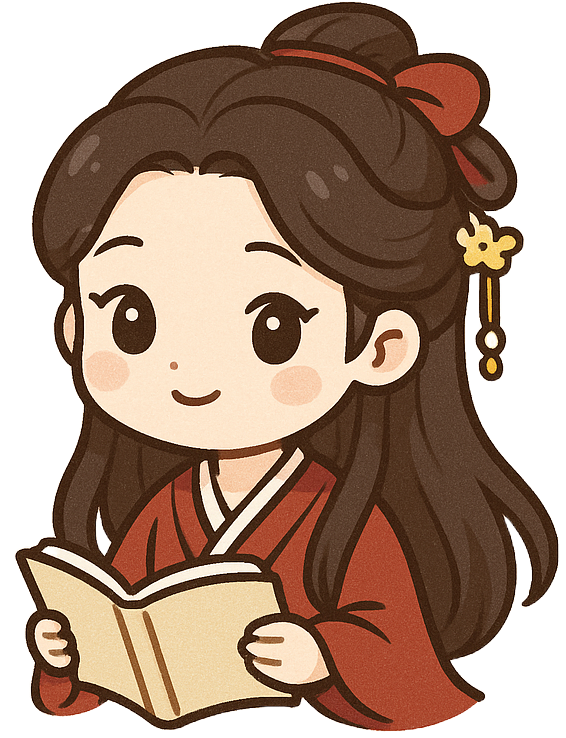
Just as they had come, the Black Armor Army with their white plumes departed like a tide, orderly and swift.

Meanwhile, the Cheng Family busied themselves piling firewood and dousing oil beneath their own fallen, preparing for a collective cremation before gathering the ashes separately. The bandits' corpses, however, were unceremoniously tossed into the mountain ravine to be devoured by carrion birds. Shao Shang stood at the forefront, playing a flute to bid farewell to these innocent souls bound for the underworld.

The melancholic melody drifted to the departing Black Armor Army. The originally lively "bamboo branch tune" had been lowered in pitch and slowed by the girl, resembling the wind whispering through a bamboo grove under the cold winter sun—chilling and sorrowful.

Ling Buyi listened with a faint smile, but his expression suddenly turned cold and self-loathing, like a proud and beautiful stone carving shrouded in shadow. Then, raising his horsewhip high, he spurred his steed and led the troops galloping away.

As the last note faded, Shao Shang lowered her flute, her face streaked with tears. Many young men and women who had been laughing just yesterday would never return to their waiting loved ones. Faced with this reality, she realized how powerless she truly was.

The two surviving maids had identified eleven bandits from the captives who had harmed them. Shao Shang sat inside, listening to the clamor of onlookers outside witnessing the execution by dismemberment. Unsurprisingly, dinner that night saw many leftovers, especially among the maids and elderly servants accustomed to the sheltered life of the inner household, who were too nauseated by the bloody spectacle to eat.

Once the executions concluded, Ling Buyi immediately led his troops to capture the bandit leader, leaving two hundred Black Armor soldiers to escort the Cheng family convoy to Hua County. The leader of this detachment was the older guard who had suffered an arrow through his arm.

Only then did Shao Shang learn his name was Zhang Shan, holding an official rank of several hundred shi, serving as a lieutenant under Ling Buyi. The scarred guard who seemed so amiable was named Liang Qiuqi, and the talkative young one, Liang Qiu Fei, was his younger brother.

At dawn the next day, Shao Shang donned men's attire again and mounted her beloved spotted pony.

The Cheng Family—from the wounded family generals to the maids and servants supporting the carts—gazed up at the faint morning light, awaiting the Young Lady's command to depart. Shao Shang raised her right arm and cracked her whip through the air. The wheels began to turn slowly as she looked back from her horse, finally leaving the blood-soaked valley alive.

The convoy traveled eastward without further incident. Shao Shang mused that any petty thieves considering an ambush would surely be deterred by the solemn presence of the Black Armor Army riding alongside.

Sang Shi, her fever subsiding after taking medicine, gradually regained clarity. She looked apologetically at Shao Shang, who had come to visit: "I had hoped to take you on a leisurely trip, to see the sights. Instead, I’ve brought you such suffering. You might as well have stayed in the Capital City..."

Shao Shang quickly interrupted: "Aunt, you mustn’t say that! With my troublemaking nature, I’d never stay idle in the Capital—Mother would have throttled me by now! Honestly, this trip was the right decision. I’ve met so many remarkable scholars, visited so many fascinating places, and even witnessed a bandit uprising. When we return to the Capital for banquets, just imagine the stories I’ll spin! I’ll boast about my unmatched archery skills—how I never miss, how one arrow can pierce two foes, how the bandits fled at the sight of me..." She playfully threatened the maids and servants in the carriage, "And none of you better ruin my tales!"The women were all amused to the point of laughter, and even Sang Shi's pale, sickly complexion flushed with a rosy hue.

Shao Shang didn't linger long inside the carriage. She kept riding back and forth along the convoy, tending to the wounded for signs of fever or festering, inquiring about the road conditions ahead, and looking after Cheng Wei and the twin boys... By midday, she was already exhausted, her body stiff and aching. Fortunately, Zhang Shan was occupied chatting with the Li father and son, sparing her the need to entertain him.

When they were just half a day away from Hua County, they spotted Uncle Pig Trotters, whom they hadn't seen in days, leading a long column of soldiers galloping frantically toward them from a side road. Recognizing Shao Shang's group as they drew near, Cheng Zhi charged forward like a porcupine stepping on an acupressure mat, howling as he rushed over, frantically shouting, "Where's your aunt? Where's my wife? Where is she?!"

Shao Shang sneered repeatedly, initially intending to mock him on the spot. But seeing him unshaven, disheveled, sallow, and emaciated, with his topknot even tied askew—the usually elegant and jade-like Cheng Daren had transformed into a pitiful wreck in just two days—she held her tongue.

Before Shao Shang could speak, the family generals beside her pointed out Sang Shi's carriage. Cheng Zhi scrambled over in a frenzy, and soon, his wailing and Sang Shi's joyful sobs echoed from inside the carriage.

Shao Shang suddenly felt very superfluous.

From Cheng Zhi's accompanying guards, she learned what had happened. That day, upon entering Qing County's town, Cheng Zhi had found it strangely quiet—though sparsely populated, everything else seemed normal. At the county office, he discovered that his senior brother, the magistrate, was absent. The deputy magistrate knew nothing, only saying that County Magistrate Gongsun had hurriedly left with soldiers three days prior and had just sent word that he would return that afternoon.

The slow-witted Cheng Daren waited over an hour before his senior brother returned. Upon hearing the news, he nearly died of fright. Even with his dull mind, he immediately realized that his wife and niece's group, still out in the wild, were now in greater danger.

To prevent scattered bandits from exploiting the chaos, the Emperor had ordered all local officials to remain stationed in their cities and not leave without authorization. Senior Brother Gongsun had no choice but to lend troops to his foolish junior to search for them. However, by then, the Cheng Residence party had already fled to the hunting lodge for refuge.

Cheng Zhi and his large contingent wandered aimlessly like headless flies until dusk, when it finally occurred to him to go straight to Li Taigong's village. But by the time they arrived, the filial Li Wulang had already led the village militia to rescue his father overnight.

Frantically worried, Cheng Zhi only knew that his wife's group had indeed encountered bandits. The other villagers couldn't clearly explain where their Taigong was hiding, so he couldn't bear to wait another moment and set out to search. In the pitch-dark chaos, the large contingent stumbled into a valley, injuring a third of the guards and soldiers. It wasn't until dawn the next day that they regrouped. This time, Cheng Zhi had the sense to hire a local guide, checking every possible location with a hunting lodge until, at daybreak, they finally found the right place.

But by the time they reached the lodge, Shao Shang's group had already departed, leaving behind only scattered remnants of the fierce battle—severed limbs, bloodstains, and a large, extinguished cremation site. Cheng Zhi's imagination ran wild, and he fainted on the spot. After being revived with water by his guards, they persuaded him that the Cheng Family might have already been rescued and left. So he set off in pursuit once more...After listening to this long, disjointed account, Shao Shang was absolutely furious. These days, the worse someone's brains were, the better their luck seemed to be. What made her grit her teeth the most was that this pig-footed uncle had wandered all over the mountains and fields for days and nights without encountering a single bandit!

To put it bluntly, Third Uncle Cheng Zhi was the epitome of someone who had been lucky since birth.

Born fair and adorable, strikingly resembling the famously handsome Cheng Taigong, he outshone all his siblings combined in looks. Cheng Mu doted on him so much that even when the family was struggling financially, she never let him suffer the slightest hardship. Before he turned ten, his eldest brother began rising in status, and everyone in the village praised young master Cheng as outstanding and wonderful. A few years later, the socially adept Madam Xiao connected with several renowned scholars and aristocratic families, smoothly sending Cheng Zhi to White Deer Mountain for study and prestige.

Normally, someone like Cheng Zhi—with weak academic foundations and mediocre family background—would have inevitably faced cold shoulders and ridicule from his mountain classmates. But unexpectedly, he encountered a senior brother who was a sucker for good looks. Taking pity on his youthful handsomeness and naive charm, this senior brother shielded him until his own graduation and official appointment (Shao Shang finally realized this was an era that heavily favored appearances). While the outside world was in chaos, engulfed in war and flames, Cheng Zhi happily pursued his studies in the peaceful seclusion of the mountains.

Just before leaving the mountain, he even managed to marry the daughter of the mountain's master. From then on, his doting father-in-law and brother-in-law, who cherished Sang Shi, protected him so thoroughly that his official career flourished smoothly, saving Old Man Cheng a lot of effort.

Shao Shang finally understood why she had always inexplicably disliked her uncle. As someone who had been unlucky since childhood, how could she not burn with jealousy seeing someone like Cheng Zhi?!

After chatting with Sang Shi for half an hour, Cheng Zhi finally emerged to profusely thank Zhang Shan and the Li family father and son. Zhang Shan merely said, "We were just following orders," so Cheng Zhi poured all his gratitude—born from shock and panic—onto the Li family, immediately proposing a marriage alliance on the spot.

Cheng Zhi declared: His father-in-law already had plans for his eldest daughter Cheng Wei, but his twin sons were still single! Good-looking and physically strong—would they like to pick one?

Li Taigong, considering that although the Cheng family was newly risen, they showed clear signs of prosperity, readily agreed. To show sincerity, Li Taigong laid out his family's situation plainly: though he currently only had grandsons and no granddaughters, and the two pregnant new brides seemed to be carrying boys again, he pointed to his fifth son, Li Wulang, and said, "See him? He's been secretly holding hands and stealing kisses with the daughter of a family friend, and I've been pretending not to notice. I'll go propose soon—with some effort, they'll have a child in the next couple of years!"

Li Wulang: "Father... please don't..."

Cheng Zhi, ever considerate, also thought of the Li family's worries and warmly urged the father and son to return home quickly on horseback. After all, with the Cheng Residence's family generals and the guards borrowed from his senior brother, they could defend themselves well enough to reach Hua County. The father and son happily agreed.

However, when it came to dismissing the Black Armor Army, Cheng Zhi hit a wall. Zhang Shan insisted, "Military orders cannot be disobeyed," and refused to leave until he saw them safely enter Hua County.

For the rest of the day, Cheng Zhi didn't leave Sang Shi's carriage, even driving out A Zhu and the others. He personally handled everything—serving tea, feeding meals, changing bandages, and dressing wounds.

Shao Shang kept a stern face, glaring silently while cursing inwardly a hundred times. But since her pig-footed uncle, though brainless, genuinely loved Sang Shi, she obediently continued to temporarily lead the convoy as acting head of the household.As they approached the gates of Hua County, Zhang Shan stepped forward with rigid formality, clasped his hands in farewell, and firmly declined the two boxes of gold ingots Shao Shang had dug out from her uncle’s luggage. He added, “If the Young Lady wishes to express gratitude, she may do so personally to my Young Master in the future.”

Shao Shang forced a stiff smile. “Of course, of course…” There were two problems here. First, the thought of presenting two boxes of gold to Ling Buyi as a reward was so horrifying she didn’t dare entertain it. Second, she sincerely hoped never to see Ling Buyi again.

Cheng Zhi had been stationed in Hua County for many years, and the guards at the city gates immediately recognized the familiar Cheng Residence escorts and maids, promptly opening the gates to welcome them.

As the gates slowly swung open, what greeted them was a sea of white funeral banners. Most of the pedestrians on the streets were dressed in mourning clothes, and even the guard who had opened the gates wiped away tears, murmuring with bowed head, “Young Master Cheng, you’ve finally returned…”

Even Shao Shang, dense as she was, sensed something amiss. She quickly dragged her uncle out of the carriage, where he had been lost in affectionate whispers with his wife.

Cheng Zhi stood at the city gates, staring blankly at the mourning-clad citizens filling the streets. Even the shops along the road were crafting coffins. After a dazed moment, he snapped back to reality and instructed his wife to proceed slowly while he hastily mounted his horse and galloped toward the county office. Shao Shang quickly spurred her horse to follow.

After turning two street corners, the tall, austere four-courtyard county office stood before the uncle and niece. The newly laid stone steps were as pristine as ever, but white funeral banners now hung from the roof and gate, fluttering in the wind like a blizzard.

Both of them were stunned.

Cheng Zhi thought: This is bad. I left in such a hurry to search for her that I didn’t even ask my senior brother about Hua County’s situation.

Shao Shang thought: Didn’t Ling Buyi say Hua County was unharmed? Is he a liar too?!

When the county clerk came out and saw Cheng Zhi, he immediately threw himself to his knees, weeping uncontrollably and repeating the same phrase: “Young Master Cheng, you’ve finally come, finally come…” Then he added, “Old Master Cheng has passed away…!”

Cheng Zhi’s vision darkened, and he swayed, on the verge of collapsing. Shao Shang hurried to support her unreliable uncle, but he refused her help, instead collapsing onto the county office steps and wailing in grief.

The magistrate of Hua County also bore the surname Cheng, but unlike Shao Shang’s family, his lineage hailed from a prominent clan in Henan. Magistrate Cheng was nearly sixty, a gentle and refined man who resembled a kind-hearted teacher reluctant to punish his students more than a bureaucrat.

Over their years as colleagues, Old Master Cheng had treated Cheng Zhi, his junior of the same surname, like a son, patiently guiding him in daily affairs. In truth, the old magistrate had long been in poor health. Had the Cheng family not lost too many of its younger generation during the turbulent times, leaving their official ranks thinly stretched, he wouldn’t have had to answer the summons to serve at such an advanced age.

After a drink, the old man often rambled: In another two years, I’ll retire. Finally, I can return home to savor wine, read books, and indulge in refined pleasures…

Cheng Zhi would then laugh and say: You’ve said that eighteen times already! Bear with it a few more years—if some strict magistrate takes over, I won’t survive!

Three days ago, the rebels had launched a sudden attack. While the Emperor’s encampment had been well-prepared and remained unscathed, the desperate remnants of the rebel forces, far from surrendering, had instead scattered under instigation to loot nearby areas. One particularly vicious band of bandits had descended upon the wealthy neighboring Hua County.Several years of peace had lulled the people into complacency. Fortunately, the old Magistrate Cheng reacted swiftly, ordering the city gates to be shut tight and summoning soldiers, able-bodied men, and wealthy households to aid in defending the city. Although Hua County had few garrisoned troops, its city defenses had been reinforced over the years and were quite sturdy, making it difficult for the bandits to breach them at once. The townspeople were protected by the thick city walls, but those in the countryside outside were not. Caught off guard, the villages surrounding the county suffered heavy casualties.

Thus, one of the most common and tragic scenes in ancient warfare unfolded—albeit on a much smaller scale.

The bandits drove the elderly, weak, women, and children they had captured from the villages to the city gates, threatening the old Magistrate Cheng to open the gates or they would begin killing. To demonstrate, they impaled a still-crying infant on a spear and showed it to those atop the city walls.

The people inside the city were under the old Magistrate Cheng’s governance, as were those in the surrounding countryside. He had never forgotten them when collecting taxes or assigning corvée labor—how could he abandon them now? The old magistrate immediately bid farewell to his elderly wife and young grandson (his son had died early), then led his family generals, half the soldiers, and volunteers from the city to engage the enemy outside the gates.

Before leaving, the white-haired old man sternly ordered the gatekeepers to lower the gate bar and seal it with molten copper once they departed. The city was not to be opened until the bandits were completely annihilated!

In truth, everyone knew the odds were against them—how could such a small force defeat the fierce bandits? The old magistrate knew it too. His only hope was to disrupt the bandits’ ranks so the captured villagers could escape. After half a day of fierce fighting, the hostages indeed scattered and fled, but the defending force had suffered over fifty percent casualties and was on the verge of annihilation—until reinforcements arrived.

The Emperor’s elite Tiger Guard had divided into several units to suppress the bandits, and two of them, hearing of the crisis, rushed to Hua County. They killed most of the fierce bandits, and the remaining outlaws fled in disarray. Those atop the city walls, seeing this, wept as they broke open the sealed gate bar, but they could not find the old magistrate anywhere. Only after inspecting the battlefield did they discover his corpse—missing an arm.

Upon hearing the news, Sang Shi, despite her leg injury, limped to the county office and knelt before Magistrate Cheng’s spirit tablet, weeping uncontrollably. Cheng Zhi, already dressed in mourning white, had tears frozen on his face by the cold wind and insisted on keeping vigil for the elder who had treated him like family. Shao Shang’s eyes brimmed with tears as she quietly found a white cloth to tie around her waist and knelt before the tablet as well.

Amid the hoarse sobs filling the residence, the fully white-clad Lady Cheng smiled faintly and said to Cheng Zhi, “Having survived the chaos of war and lived to this age, we’ve had no regrets. My son died young, and His Lordship long regarded you as his own. Stay by his spirit for three days. After that, you must not indulge in such grief—the county still has much work for you to do.”

Cheng Zhi, his voice raw from weeping, could not speak. After a long while, he nodded numbly.

Lady Cheng then turned to Sang Shi and said gently, “We both lived to see our hair turn white—that counts as growing old together. I hope you and Zirong will have the same fortune, loving each other faithfully all your lives. You’re injured—don’t torment yourself like this.” With that, she ordered her maids to forcibly escort Sang Shi away to rest and recover.

That night, staying in the county office’s rear quarters, Shao Shang crouched by the bed to change Sang Shi’s bandages and couldn’t help saying, “The old magistrate was so advanced in years—why did he have to risk going outside the city? Couldn’t the family generals and garrison soldiers have gone instead? Wouldn’t that still have been fulfilling his duty? At his age, I don’t think His Majesty would have blamed him.”"It's not for the Emperor." Sang Shi's eyes were red from crying, and it took her a long moment before she solemnly continued, "His Majesty may not blame us, but all the families and clans are watching. Under such scrutiny, without this spirit, how could the descendants of the Cheng family in Henan hold their heads high when competing for official positions?"

Seeing Shao Shang too frightened to speak, Sang Shi realized her tone had been too harsh. She gently stroked the girl's hair and said softly, "Those of us born into noble families should naturally be stronger than commoners. We must charge first in battle and face hardships head-on—otherwise, what right do we have to hold high positions and receive the support of the people? If we only seek to survive, how can we face our ancestors in their graves?"

Shao Shang hesitated before murmuring, "...Our Cheng family isn’t exactly a noble family yet."

Sang Shi gave a faint smile. "Perhaps we will be in the future. Starting from your father and uncle’s generation, if every descendant strives with courage and diligence, after our deaths, tall memorial tablets will be erected in the ancestral hall for future generations to revere, ensuring our legacy endures. Elder Cheng died saving the people—a noble sacrifice, a great virtue. This was a worthy death."

Shao Shang could say no more.

In her era, many works criticized noble families for their obstinacy, backwardness, and tendency to compromise for temporary peace. Many emperors prided themselves on dismantling the power of these families and crushing their influence.

But in this era, the scions of noble houses still burned with fervor, swords at their sides, daring to tread alone across seas and snowfields.

At the same time, she understood for the first time what family truly meant. If she enjoyed the protection and comforts of the Cheng family, then even if she couldn’t bring glory to it, she must never bring it shame—through reckless indulgence, betrayal, or treason.

She sighed quietly. Living well in this era was truly no easy feat.

Author's Note: Regarding noble families, I’ve wanted to say this for a long time.

Historical development is a gradual process. If the people’s wisdom remains unawakened and productivity hasn’t surged, it’s impossible to establish modern systems in a primitive society.

To modern society, feudal monarchy is naturally decadent and backward, but to primitive tribal clans, it was an astonishing leap forward.

Similarly, noble families, as a historical phenomenon, went through phases of rise, development, peak, decline, and lingering survival. I don’t believe it’s fair to indiscriminately criticize them without considering their era.

Thus, I reject all attempts to whitewash the Sima Jin dynasty. Based on my limited historical knowledge, before the Sima Jin dynasty, the scions of noble families were still passionate and resolute—whether as strategists or generals, even if cruel and bloodthirsty, they fought to stand at the forefront of their time, exuding a bold and fiery spirit.

But what became of noble scions after the Jin dynasties? Powdered faces, drug abuse, cross-dressing—the retreat to the south began with them!

The turning point was the Sima family’s rise to power! The Sima clan utterly slaughtered the last remnants of noble fervor and ambition. From then on, families competed in obscurity, and idle political talk replaced state affairs.

I’ll say it again: If you seize power unjustly, fine—Li Shimin wasn’t exactly righteous either, but he later proved himself. But the Sima family? I won’t even elaborate.Regarding Sima Yi, I truly don't consider him a hero. In my view, his greatest strength was longevity. He not only outlived three generations of Lord Cao's descendants but also survived all the renowned strategists and fierce generals of his era.

When all those legendary heroes of the time had passed away, who else was left to stand in his way?

The Sima family's rise to power wasn't achieved through overwhelming dominance like Lord Cao's, leaving no room for dissent. Instead, their opponent was someone like Cao Zhen—a politically inexperienced nobleman. At the time, advisors urged Cao Zhen to decisively eliminate Sima Yi and his sons without hesitation, as the Sima family would have been powerless to resist. Yet Cao Zhen hesitated.

Seizing the opportunity, Sima Yi struck first, successfully staging a military coup.

After success comes slaughter—slaughter the Cao family, slaughter the Xiahou family, slaughter all the powerful clans who refuse to submit, slaughter all the ministers who dissent against him, exterminating entire clans one after another!

Truly, the old who refuse to die are nothing but thieves!

He’s not even as good as Tokugawa Ieyasu—though he too waited patiently like a "turtle in hiding" before finally seizing power, at least he established over 260 years of Edo prosperity. What did the Sima family bring? The Uprising of the Five Barbarians?!

—The above is just my humble opinion. Feel free to disagree, but no personal attacks or vulgar language, thank you.