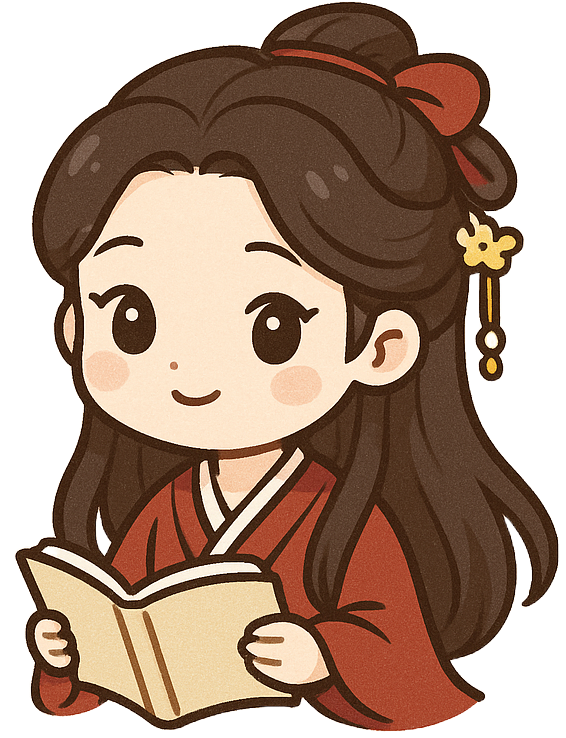
The great war had ended, and peace was restored to the realm. The guilty ministers were punished, and the meritorious officials were rewarded.
At the Duke of Yingguo's Manor, both the Duke of Yingguo and the Second Young Master Lu Ya received rewards. As for the main branch, aside from Lu Zhuo's posthumous honors, his mother, He Shi, was granted the title of First-Class Imperial Order Lady. Wei Rao, for her merit in exposing the Han family's grave crime of colluding with the enemy, was granted the title of Princess of Martial Peace. A Bao, owing to her parents' military achievements, was granted the title of Prefectural Princess of Precious Glory.
Yet no amount of rewards could bring Lu Zhuo back.
The Duke of Yingguo, who had been so formidable in repelling the Western Qiang, seemed to have aged overnight. Though he still held the position of commander of the Divine Martial Army, he entrusted the task of reorganizing the army to Fourth Master and Lu Ya. After decades of campaigning, the Duke of Yingguo finally laid aside his armor and remained in the manor to accompany his elderly wife. The Duchess of Yingguo had already bid farewell to three sons, and now her eldest grandson was gone. Though the Old Madam was deeply grieved, her advanced age made it easier for her to accept things. She was more concerned about He Shi and Wei Rao.
Wei Rao appeared to be doing well.
Aside from the day of Lu Zhuo's burial, Wei Rao had never shed tears in front of others. Even when He Shi wept bitterly before her, Wei Rao could watch calmly. At first, she would try to comfort He Shi, but later, finding such efforts futile, she grew weary of repeating the same empty words. She simply instructed Ma Momo to take A Bao away, lest the child be frightened by He Shi's crying.
He Weiyu had returned with her child for a short stay. Wei Rao had no patience to console He Shi, but He Weiyu did.
The Duchess of Yingguo sympathized with He Shi's grief over losing her son, but He Shi's ability to weep was a sign of normalcy. Once He Shi had cried her fill, time would gradually ease her pain. The Duchess was more worried about Wei Rao. This child clearly cared deeply for her eldest grandson—she had even gone to the battlefield for him—yet now she acted as if nothing had happened, caring for A Bao and bottling up her sorrow. Knowing that suppression was worse than release, the Duchess feared that prolonged repression would lead to illness.
Out of concern, the Duchess of Yingguo invited Shou An Jun to visit.
Shou An Jun seldom came to the capital, but for her granddaughter's sake, she made the trip without hesitation.
When Shou An Jun arrived at the Hall of Pine and Moon, Wei Rao was playing with an abacus with A Bao.
Not yet two years old, A Bao was too young to understand the pain of losing her father. She likely could not even remember what her father looked like. As long as her mother was present and her familiar playmates were around, A Bao remained carefree. She would chase after leaves blown by the wind, laughing with joyful clarity, or she would ask to sit on her mother's lap and play with the abacus when she saw her mother reviewing account books.
"Grandmother, what brings you here?"
Wei Rao only learned of Shou An Jun's arrival at the Hall of Pine and Moon when she was already there. Hurriedly carrying her daughter, she came out to greet her.
Shou An Jun stood at one end of the corridor, watching her granddaughter step out of the hall.
During Lu Zhuo's funeral, Shou An Jun had visited the Duke of Yingguo's Manor. At that time, Wei Rao had just returned from the border regions, looking thin and haggard. Aside from shedding few tears, she was no different from other young widows who had lost their husbands early. Now, a month later, Wei Rao had regained her rosy complexion and her former radiant beauty.
It had been less than three months since Lu Zhuo's death in battle. While He Shi was still weeping incessantly, Wei Rao's appearance was such that only the kind-hearted Duchess of Yingguo would worry about her suppressing her grief to the point of illness. A more narrow-minded old lady might have suspected that Wei Rao did not care for Lu Zhuo at all.
After asking Ma Momo, Bitao, and others to play with A Bao, Wei Rao invited Shou An Jun into the inner chamber."The Old Madam is worried about you, so she sent me to check on you." Shou An Jun got straight to the point without hiding anything.
Wei Rao had somewhat anticipated this.
"Rao Rao, tell your grandmother what’s truly on your mind." Shou An Jun held Wei Rao’s hand as she spoke.
Wei Rao smiled faintly, gazing at her grandmother’s increasingly wrinkled hands. Softly, she said, "What is there to think? He’s gone. When I was in the grasslands, I cried almost every day—missing him, cursing him, resenting him. I dreamed of him night after night. But gone is gone. Should I spend the rest of my life weeping for him? When my father passed away, I didn’t mourn for long. When my mother left, I only cried when I was sick or felt wronged. When Grandmother died, my tears dried even faster…"
As she spoke, two clear teardrops traced paths down her fair, radiant cheeks.
Shou An Jun tenderly drew her granddaughter into her embrace.
She understood what her granddaughter meant.
Losing her father in childhood, parting from her mother in youth, being framed, slandered, and even targeted for assassination…
Some people might never experience even one such hardship in their entire lives, yet her granddaughter, from the time she could remember, had rarely known true happiness.
Those who have never been hurt may feel pain from a mere pinprick, but for someone who has endured wounds time and again, another cut, however painful, eventually fades.
"Grandmother, I still miss him. But I can’t let my longing stop me from living my life. I miss him, but I also want to live well. Do you understand what I mean?"
Shou An Jun understood.
When parents pass away, their children grieve for a few days, then carry on with their lives. Who decreed that a wife must weep daily for her departed husband? Some dwell in sorrow longer, others shorter—it doesn’t mean the former loved more deeply or the latter loved falsely.
Some pour all their heart into one person; if that person meets misfortune, their world seems to collapse, and they feel they can’t go on. Others, with businesses to run or children to care for, force themselves not to sink too deep. The more responsibilities one bears, the less one can afford to be consumed by a single loss.
"Rao Rao, you’re right to think this way. Take the matter of Shoucheng, for instance—the Lu Family mourns deeply, yet everyone has gradually recovered. The Old Madam has accepted it, the Second Young Master has accepted it. Your mother-in-law grieves differently from you—she weeps as she must, but you needn’t force tears for appearances. I’ll explain things to the Old Madam on your behalf." Shou An Jun’s voice was filled with affection.
Wei Rao nodded, leaning against her grandmother’s shoulder. "After the New Year, I’ll take A Bao back to live at the Princess Estate. Staying here is too exhausting. People assume I’m heartbroken—they restrain their joy around me and tiptoe with cautious concern. I don’t need that kind of attention, nor do I want to disturb them. Moving out will be better for everyone."
Shou An Jun also felt her granddaughter would be more at ease back at the Princess Estate, but…
"If you move, what will your mother-in-law do when she misses A Bao?"
Wei Rao replied, "I’ll bring A Bao back to stay for two nights each month. If my mother-in-law is willing, she can also come stay with us at the Princess Estate."
Shou An Jun asked, "But won’t that distance A Bao from his cousins in the Lu Family?"Wei Rao smiled and said, "If personalities align, distance won't hinder closeness—just like with my cousin Huizhu and me, or like the heir and his brothers. But if temperaments clash, even living under the same roof breeds mutual aversion, as with Wei Chan and me."
Upon hearing this, Shou An Jun patted her granddaughter's shoulder and sighed remorsefully, "This old grandmother is truly aging, failing to grasp what even Rao Rao sees so clearly."
Wei Rao spoke these words to her grandmother with firm resolve.
After the New Year celebrations concluded in the first lunar month, Wei Rao approached He Shi and the Duchess of Yingguo to discuss her plans.
He Shi's eyes reddened instantly. "Why must you move away, Rao Rao?" she asked. Shoucheng had only left them A Bao—if her daughter-in-law took the child, how could she bear it?
As He Shi voiced her distress, the Duchess of Yingguo watched Wei Rao intently, awaiting her explanation.
Wei Rao addressed the Old Madam frankly: "Grandmother, Shoucheng sacrificed himself to save Second Brother. Second Brother carries this guilt deeply, and Second Aunt and his wife also feel indebted to me. Whenever we meet in the estate, their spirits dampen at the sight of A Bao and me. As for Third Aunt and Fourth Aunt, their constant attentiveness weighs on me—I've long since made peace, yet their kindness leaves me uneasy. Thus, I propose moving with A Bao to the princess estate, returning twice monthly for visits. This way, everyone may breathe more freely."
The Duchess of Yingguo understood this sentiment well.
It mirrored her own experience after losing her son: having barely endured the grief, she faced repeated condolences—sincere or polite—that exhausted her and reopened wounds. She eventually withdrew entirely, seeking solitude at home.
Many might share such feelings, yet most have no refuge but endurance. But Wei Rao was a princess with her own estate. She could take A Bao and live undisturbed.
Regarding A Bao, the Duchess willingly entrusted her fully to Wei Rao. Age had drained her capacity to raise a child hands-on. Though He Shi was younger, she lacked the competence to guide A Bao. Entrusting the girl to Wei Rao, the Duchess believed, would nurture another spirited, unrestrained, loyal, and courageous young woman in the capital within a decade.
Wei Rao had known the Old Madam would support her.
She then comforted He Shi, hoping she would join them at the princess estate. If possible, Wei Rao wanted another devoted presence doting on her daughter. Despite He Shi's flaws, she cherished A Bao deeply. Moreover, the princess estate's environment would bring her joy—far preferable to remaining in the Lu Family, witnessing the other three branches' unbroken wholeness.
He Shi appreciated her daughter-in-law's filial devotion but declined.
As a Lu wife, her husband had secured her official title, and her son's sacrifice earned her the honor of First-Rank Imperial Order Lady. Abandoning the family for personal comfort would betray both husband and son, and disregard the Old Madam's care. Besides, with the main branch reduced to their trio, if both Rao Rao and A Bao departed, who would remember the Lu main branch, or her valiantly fallen husband and son?
For their memory, He Shi would not leave.
Wei Rao respected her mother-in-law's choice, pledging regular visits with A Bao to pay respects.
That evening, the Lu Family gathered for a meal where the Duchess announced Wei Rao's permanent move to the princess estate.The Duke of Yingguo nodded.
This granddaughter-in-law had never followed conventions. Back when his eldest grandson shamelessly begged Wei Rao to remarry him, though the Duke thought his grandson was spineless, the young couple were clearly a match—one willing to beat, the other willing to take it—and even his wife had watched their antics with amusement, so he hadn't interfered. Later, when Wei Rao rushed to the grasslands for his grandson's sake, not only saving his second son but also avenging the eldest, the Duke remembered this debt of gratitude. Now, whether Wei Rao chose to reside in the princess' estate or even drink atop his grandson's gravestone, he wouldn't raise an objection.
Lu Ya hung his head, heart filled with remorse. His grandmother had spoken with him privately—his sister-in-law's departure was to give their second branch of the family space to live peacefully.
Second Madam silently watched Wei Rao and A Bao.
She had once accepted Wei Rao, then grown disdainful of her, but now, Second Madam felt only respect and gratitude toward her. She still wouldn't raise her own daughters or granddaughters to be like Wei Rao—she lacked that kind of courage and boldness—yet after witnessing all that Wei Rao had done, Second Madam finally understood that women could live differently. Defying conventions wasn't necessarily wrong.
She was grateful Wei Rao had saved her son and grateful she had avenged the Lu family against the Han family.
If Second Madam felt this way, Lu Ya's wife, Qiao Shi, held even deeper admiration for her sister-in-law Wei Rao.
Third Madam likewise respected Wei Rao.
As for Fourth Madam, needless to say, in her heart, she regarded Wei Rao as a dear younger sister. Whatever Wei Rao did, she would support her.
Far away in the northern borders of Wuda...
The setting sun cast golden twilight over the vast grasslands as herders drove their cattle and sheep into pens.
With cooking smoke rising everywhere, it was time for the evening meal.
A seven-year-old girl named Bao Ya carried a bowl of warm goat milk into the neighboring yurt. Inside were three bedding rolls—two belonging to her brothers, who were currently eating with their parents—and on the remaining one lay a disheveled man with unkempt hair and a stubbled chin.
A long scar ran across his face.
When her father first brought this man home, his face had been bruised and swollen, the scar gruesomely gaping. Bao Ya hadn't dared to look at him then. Unconscious, he could only be force-fed some goat milk. Under her father's careful nursing, the man's facial scar gradually healed, becoming less fearsome, and the severe swelling around his eyes and cheeks subsided, revealing quite handsome features.
Perhaps because her mother had complimented him once, her father deliberately tangled the man's hair, forbidding her mother from washing it or shaving his stubble.
The man lay motionless, as lifeless as usual. Bao Ya knelt beside the bed, skillfully pinching his chin with one hand while spooning goat milk into his mouth with the other.
After feeding him, she took the poultice her father had prepared and applied the herbal paste to the wounds on the man's arms and calves.
This was a tribesman her father had brought back from the battlefield. Her father said the man was named Agula, an orphan, and terribly pitiable.
Bao Ya diligently tended to this poor man's injuries. He'd been unconscious for so long—she wondered if he would ever wake up.
Suddenly, the man's fingers, resting at his side, twitched slightly.
Startled, Bao Ya looked up and found the man had opened his eyes at some point.
Overjoyed, she set down the large bowl of herbs and ran to fetch her father.
Lu Zhuo felt utterly weak. His fingers could barely move, but his legs had no sensation at all.
His gaze swept around—it was a patched-up yurt, mended in many places.Hurried footsteps sounded from outside, and suddenly the curtain was lifted aside as a tall, lean man strode in.
Lu Zhuo had felt the girl looked somewhat familiar earlier, and now, seeing this Uda man, he finally remembered.
"Agula, you're finally awake. I, Longbu, swore I wouldn't abandon you on the battlefield, and I've kept my word," the Uda man said as he approached the bedside, turning his back to his wife and children, his gaze complex as he looked at Lu Zhuo.
A thought stirred in Lu Zhuo's heart, and he replied in the Uda Language with a word of thanks.